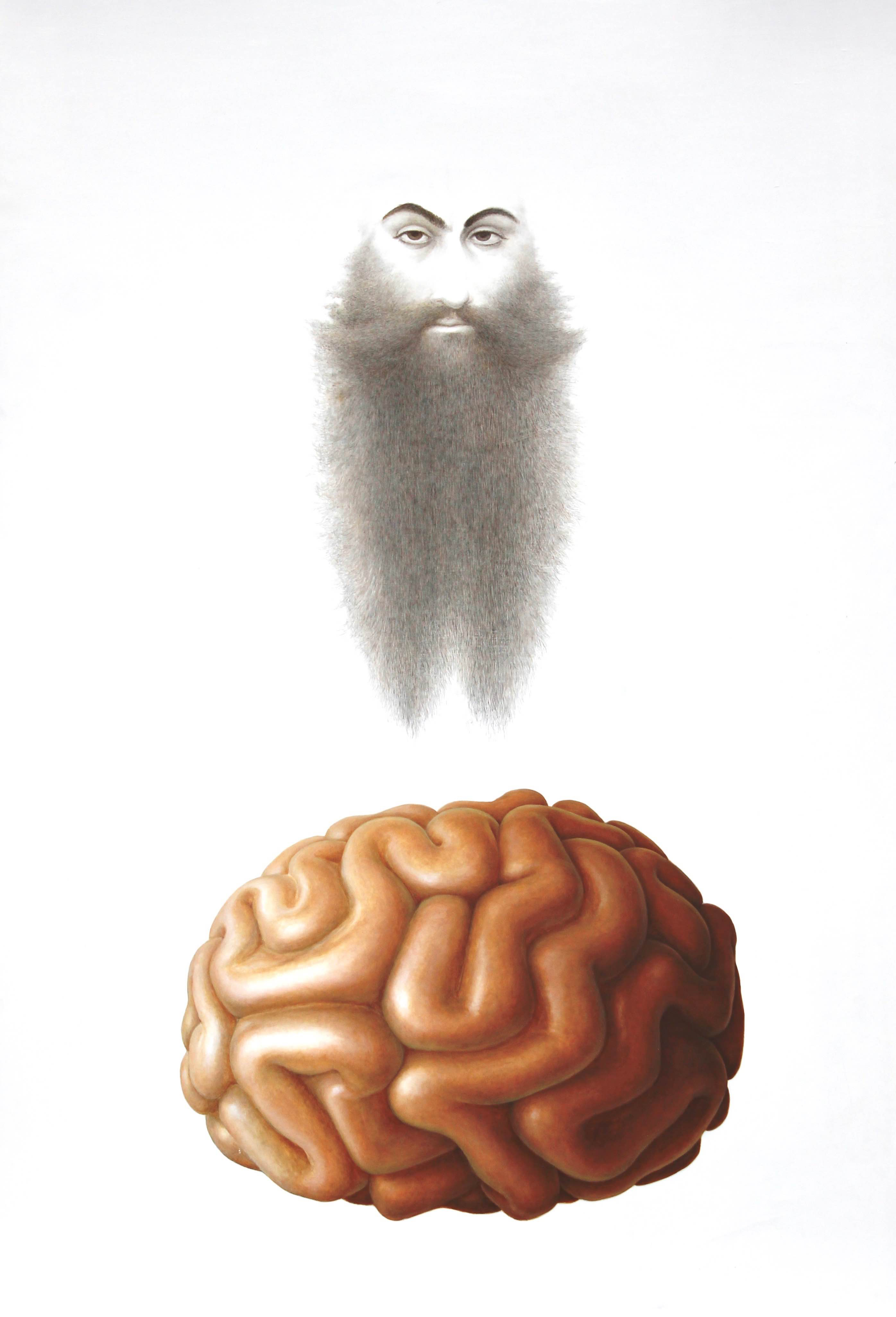
Bearded Man 2016 oil on linen 52 x 76 in. (132.1 x 193 cm)
In Soviet-ruled Georgia, God and priests were absent from public life. We were raised as atheists. When the USSR collapsed, the country was engulfed in civil war, anarchy, and crime. In the midst of hopelessness, many people returned to religion.
Men of my generation found refuge in ancient churches, grew long beards, and became priests. The government, seeking to strengthen its influence over society, began pouring money into the construction of new churches. The "rebirth" of religion transformed many priests into powerful public figures, some of whom accumulated expensive cars and large landholdings.
Priests led attacks on defenders of gay rights, using crucifixes as weapons. They also stormed movie theaters screening films that portrayed the lives of LGBTQ+ people.
Everything changes—our ways of thinking, dress codes, and technologies. Yet I continue to question why images of men in long robes and long beards still possess such power to influence people's minds and shape the rules that govern nations, religions, and societies.